This morning I feel tired. It's been a demanding week and the next one will be too. I haven't got anything to write about really because I've exhausted the stock of stories that I've been accumulating. Well, no - I have plenty more but I didn't have a chance to read through them last night and so now I'm sitting here, not wanting to let the practice of daily writing slide but not provided with a nice, neat tale to tell either.
I am thinking about time. It seems to elude me - it passes quickly, full of demands, the arrival of evening a relief, the morning approaching all too soon. I wish whole days away. 'How are you?' people ask. 'I'll be better when today is over.' Before you know it a week has gone, a month, another year. A horrible cliché! But, still, it is relentless and demoralising.
To talk about time as a river is also a commonplace but exactly what image does the comparison evoke for you? In this dejected mood, I imagine myself thrown about on the violent water, waiting for the boat to capsize and the crew of one to perish. Occasionally I see myself watching from the bank in the knowledge that one day the stream will cease to run and the mud on the river bed will dry out and scatter in the wind. 'Time is but the stream I go a-fishing in.' (This is Thoreau in Walden.) 'I drink at it, but while I drink, I see the sandy bottom and detect how shallow it is.' I love Thoreau. I would like to talk with him but it's possible we wouldn't get on.
The shallow stream: 'Its thin current slides away, but eternity remains. I would drink deeper; fish in the sky, whose bottom is pebbly with stars.' Thoreau writes passionately about time, and, a little later, talks about moments when he felt unwilling - 'could not afford', in fact - 'to sacrifice the bloom of the present moment to any work, whether of the head or hands'. On days like these, he would sit in his doorway all day long, 'in undisturbed solitude and stillness, while the birds sang around or flitted through the house.' Is this what it is to fish in time's stream or in the sky, whose bed is 'pebbly with stars'?
Right now I am tangled up in Thoreau's words, hopeful but sceptical, even a little perplexed. I have no idea of how one fishes in time's stream. I cannot imagine myself sitting all day in the doorway. I am not convinced that I could tie the knots, cast the line, wait with the confident patience that is necessary for the angler-in-the-sky. Time is on my mind but rarely have I heard anyone speak about it in a way that means very much to me. The days are intractable and the idea of dropping a hook in and waiting seems a beautiful but difficult idea. Well, 'so it goes'. (A tag from a book about time but not one that speaks about fishing, I fear.)
Enough for this morning. Shower, shave, and wade out once again into the river.
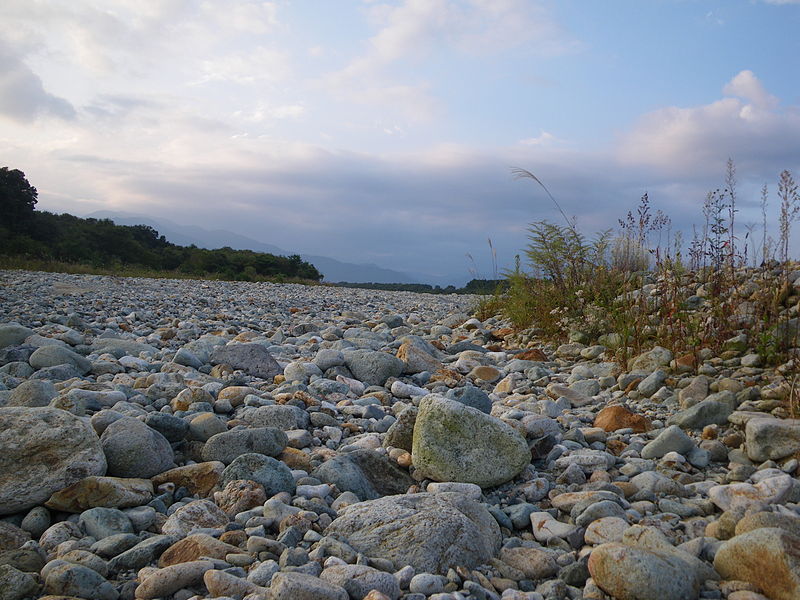
Dry river bed. No fishing here!
Showing posts with label walden. Show all posts
Friday, 8 March 2013
Tuesday, 19 February 2013
the life spiritual and the life primitive
Steve suggested that it might be interesting to look at Thoreau's Walden and, of course, he was right! There's an interesting - and complicated - discussion of fishing in the early part of the chapter called 'Higher Laws'. Here I'm going to post some long quotations from it along with a few comments of my own.
At the beginning of the chapter, Thoreau talks about finding two instincts in himself, one towards the 'higher' or 'spiritual' life and one towards a 'primitive' one, both of them objects of 'reverence' to him. Initially he associates fishing with the 'primitive' instinct:
Walden Pond in 1908
At the beginning of the chapter, Thoreau talks about finding two instincts in himself, one towards the 'higher' or 'spiritual' life and one towards a 'primitive' one, both of them objects of 'reverence' to him. Initially he associates fishing with the 'primitive' instinct:
As I came home through the woods with my string of fish, trailing my pole, it being now quite dark, I caught a glimpse of a woodchuck stealing across my path, and felt a strange thrill of savage delight, and was strongly tempted to seize and devour him raw; not that I was hungry then, except for that wildness which he represented. Once or twice, however, while I lived at the pond, I found myself ranging the woods, like a half-starved hound, with a strange abandonment, seeking some kind of venison which I might devour, and no morsel could have been too savage for me. The wildest scenes had become unaccountably familiar. I found in myself, and still find, an instinct toward a higher, or, as it is named, spiritual life, as do most men, and another toward a primitive, rank and savage one, and I reverence them both. I love the wild not less than the good. The wildness and adventure that are in fishing still recommended it to me. I like sometimes to take rank hold on life and spend my day more as the animals do.For a while, though, his perspective moves and he suggests that fishermen, hunters, woodcutters, and so on have a particular and valuable view of nature because they do not come to it with the 'expectation' that philosophers and poets do:
Perhaps I have owed to this employment [fishing] and to hunting, when quite young, my closest acquaintance with Nature. They early introduce us to and detain us in scenery with which otherwise, at that age, we should have little acquaintance. Fishermen, hunters, woodchoppers, and others, spending their lives in the fields and woods, in a peculiar sense a part of Nature themselves, are often in a more favorable mood for observing her, in the intervals of their pursuits, than philosophers or poets even, who approach her with expectation. She is not afraid to exhibit herself to them.This leads into the claim that 'science' is most rewarding when it externalises what fishermen and so on know instinctively. Incidentally, I think Thoreau is writing early enough for 'science' here to mean something like 'official knowledge' rather than having the more precise sense that we give it:
The traveller on the prairie is naturally a hunter, on the head waters of the Missouri and Columbia a trapper, and at the Falls of St. Mary a fisherman. He who is only a traveller learns things at second-hand and by the halves, and is poor authority. We are most interested when science reports what those men already know practically or instinctively, for that alone is a true humanity, or account of human experience.But just as it seems that Thoreau is taking a typically Romantic view of fishing and hunting, he performs a sort of volte-face:
I have found repeatedly, of late years, that I cannot fish without falling a little in self-respect. I have tried it again and again. I have skill at it, and, like many of my fellows, a certain instinct for it, which revives from time to time, but always when I have done I feel that it would have been better if I had not fished. I think that I do not mistake. It is a faint intimation, yet so are the first streaks of morning. There is unquestionably this instinct in me which belongs to the lower orders of creation; yet with every year I am less a fisherman, though without more humanity or even wisdom; at present I am no fisherman at all. But I see that if I were to live in a wilderness I should again be tempted to become a fisher and hunter in earnest. Beside, there is something essentially unclean about this diet and all flesh.His rejection of fishing is, in part, to do with his reservations about eating 'flesh'. I'm interested, though, that he sees his becoming 'less a fisherman' as not resulting in 'more humanity or even wisdom'. There are clearly tensions in his responses here!
Walden Pond in 1908
Subscribe to:
Posts (Atom)

